
Human Connection in a Digital Age: Lessons on Seafarer Welfare from Montreal
by Jason Zuidema (NAMMA)
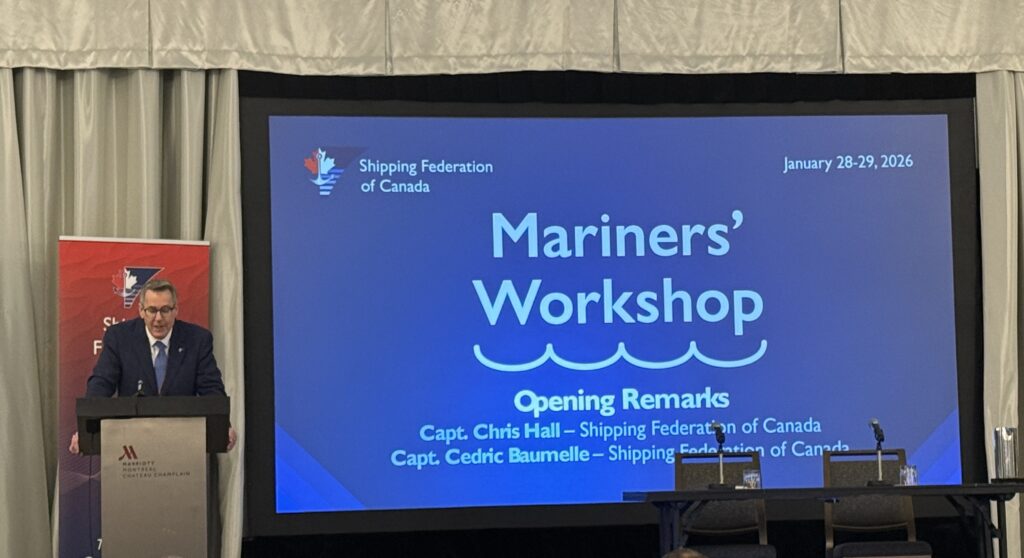
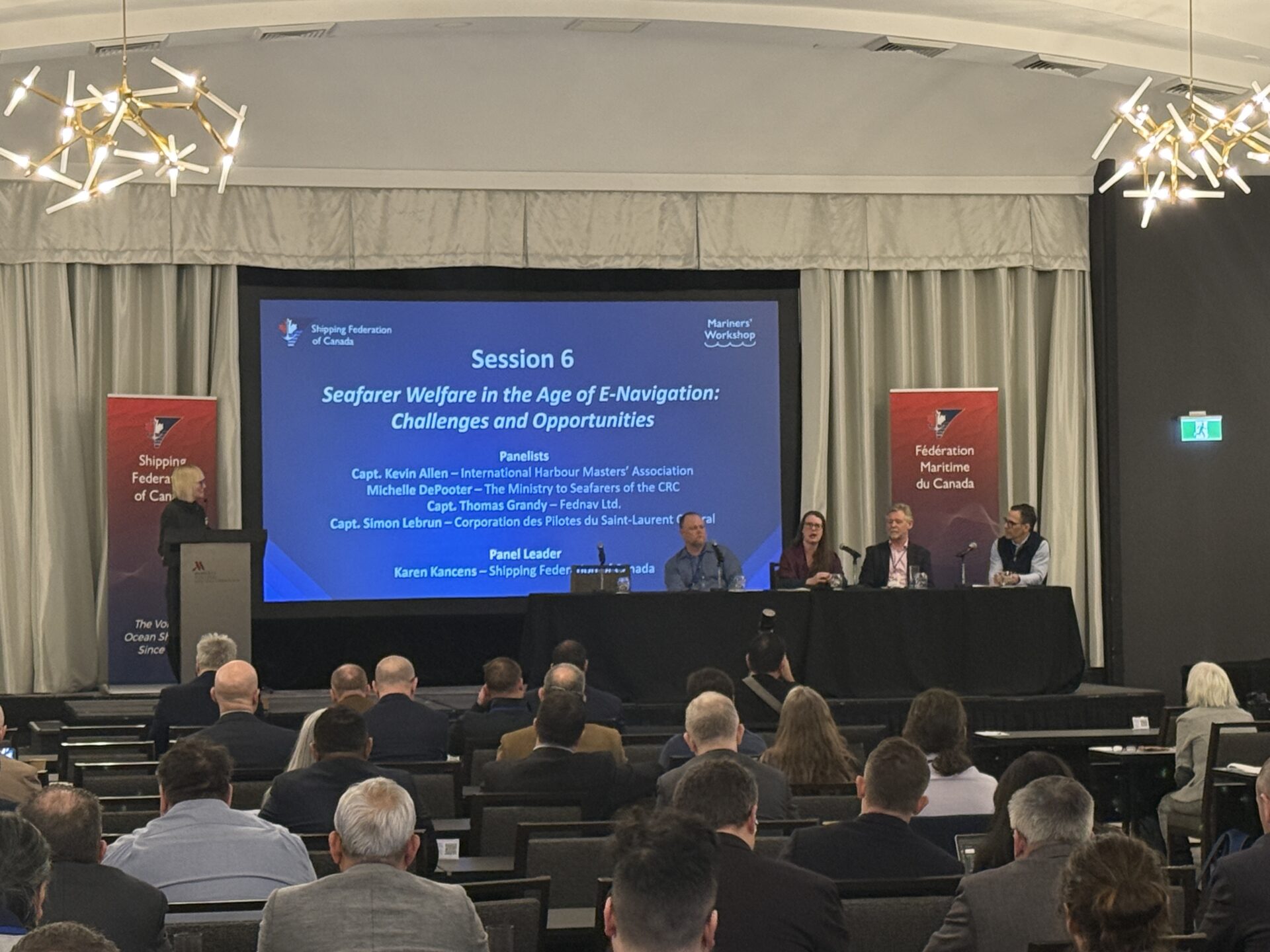
At the Mariners’ Workshop of the Shipping Federation of Canada held at the Marriott Montreal Chateau Champlain on January 29, the theme “Enhancing the Human-Tech Balance in the Age of E-Navigation” set the tone for a candid discussion about what technology is doing to life at sea. The panel on Seafarer Welfare in the Age of E-Navigation gathered voices from the bridge, the pilot ladder, the harbour master’s office, and chaplaincy. Yet the heart of the conversation often returned to the shore side, to the quiet, steady work of presence, listening, and practical care. That is where the remarks of Michelle DePooter, chaplain with The Ministry to Seafarers of the CRC and on staff at Montreal’s Mariner’s House of Montreal, offered a grounding perspective on what seafarers actually need when the screens dim and the alarms stop.
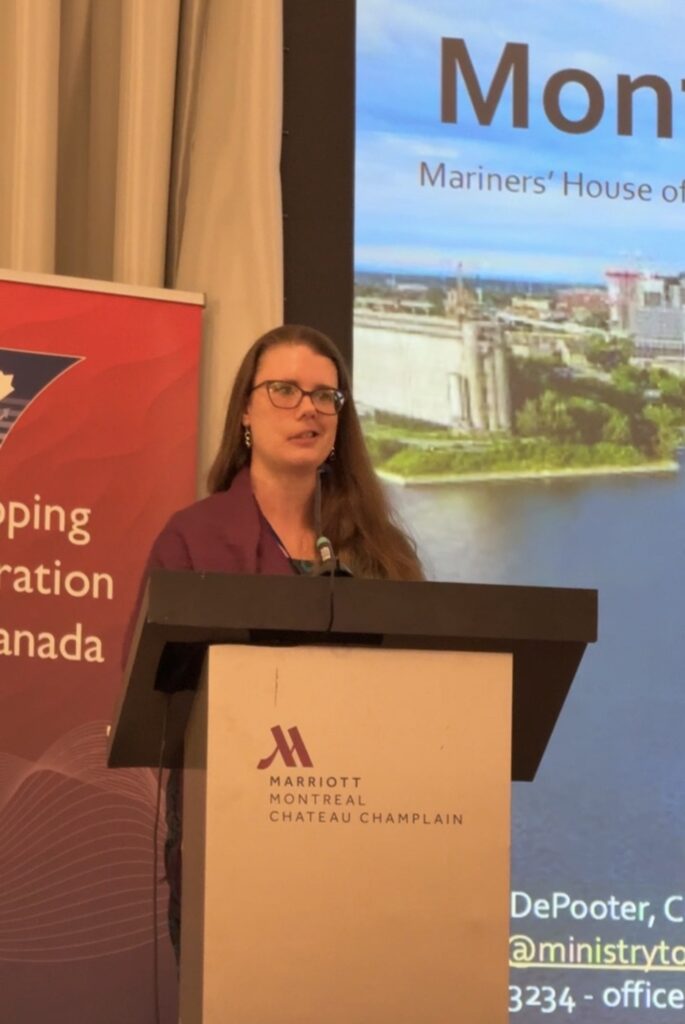
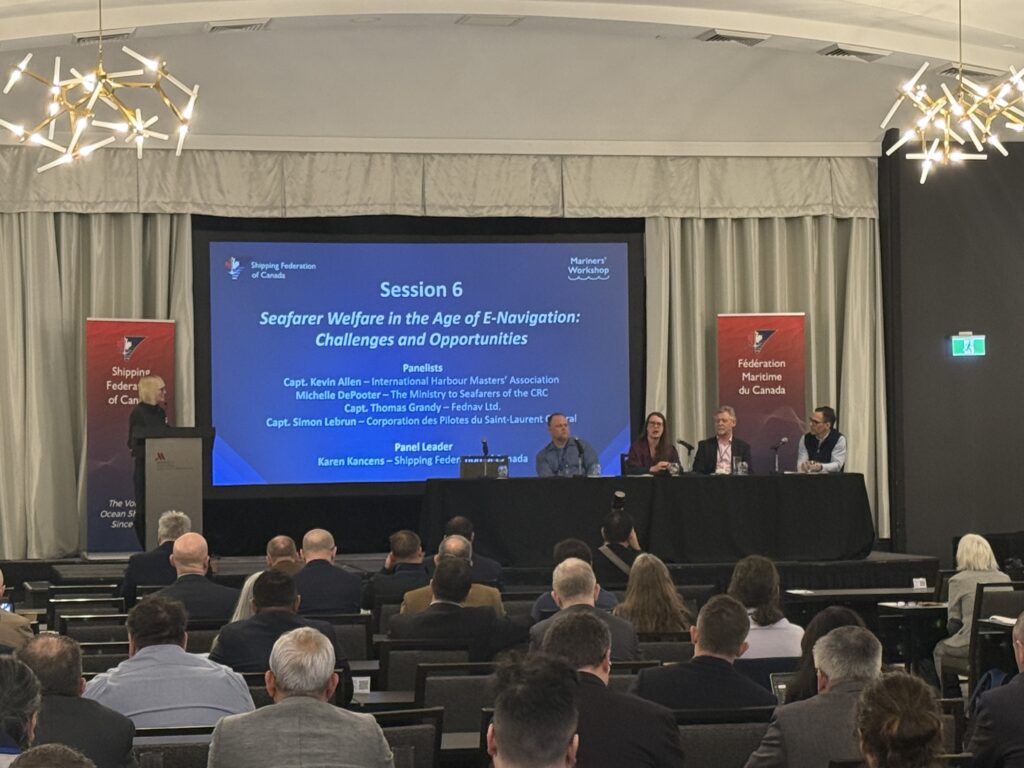
Michelle began with disarming clarity about her role among mariners. “Unlike my fellow panelists, I am not a captain, and I have never sailed.” She located her authority not in sea time but in relationships built over decades. “I have worked for the past 25 years as a chaplain with the ministry to seafarers here in Montreal, where I have spoken with 1000s and 1000s of seafarers who have told me all sorts of stories over the years.” From that vantage point, technology appears not as an abstract system but as a factor that shapes real human days and nights. Her focus stayed on what endures: care for “the physical, emotional, spiritual and justice needs of all seafarers,” delivered through welcome, ship visits, and practical support.
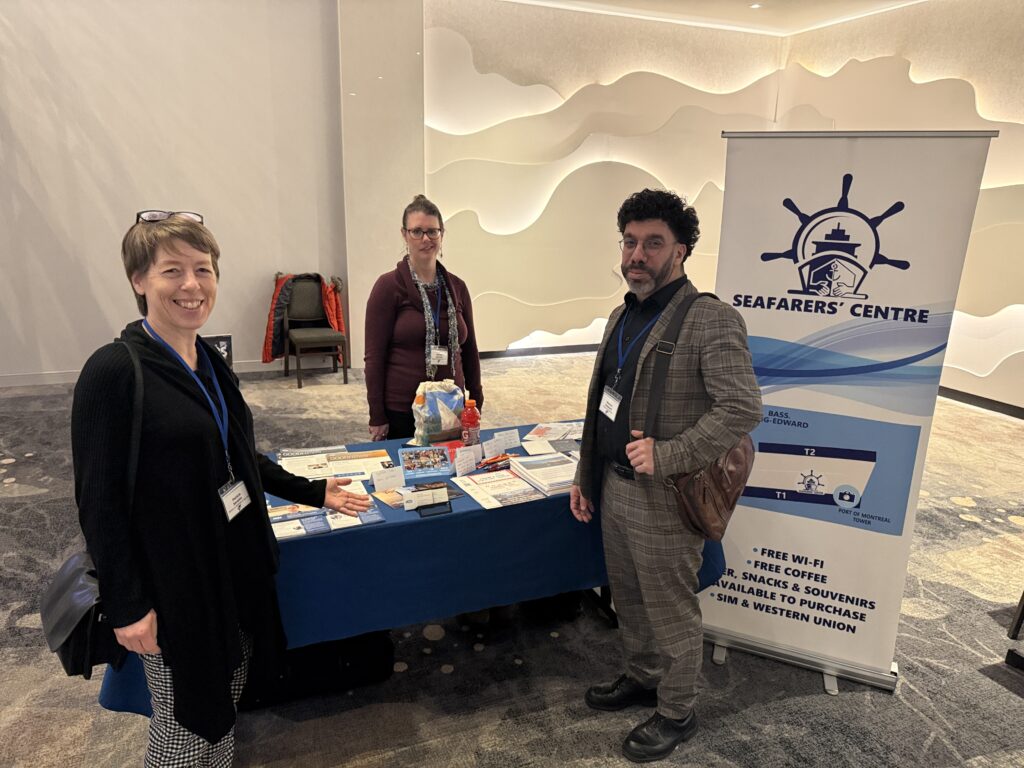
Montreal’s seafarers centre, she explained, is a collaboration that includes Mariner’s House, the M2S, and Stella Maris. The port’s support matters, and she named the partnership with gratitude. The centre is open daily and invites mariners into a space that feels human. That detail matters in an era when so much is mediated by devices. Michelle noted how the reasons for visiting have shifted. “When I started, the main reason they would come was to make phone calls. And we would do direct phone calls with a timer, and they would call very short because it was expensive.” Now many ships carry robust connectivity. “Last year 2025 we welcomed over 10,000 seafarers from over 50 different countries.” The numbers tell a story of continued need, not decline.
Her stories made the balance visible. Digital links can be a gift. “Last year, there was a seafarer that I got to know quite well, and his wife was expecting a baby. He was on board for nine months. So he was not home when his wife gave birth, but he his boss gave him the day off, and he was able to be on video call with his wife while she was in labor, and able to meet his his daughter when she was born by by video, which did not happen 25 years ago.” At the same time, presence cannot be replaced by bandwidth. A simple conversation about roses and fruit trees can be the most pastoral act of the day. “A month ago, I met a Russian chief officer, and we talked for an hour about his roses and how he grasps fruit trees.” When he asked if she needed to be somewhere else, she replied, “No, I’m here. I’m here to talk with you.” That sentence captures a ministry of availability that technology cannot automate.
The practical side of welfare came through in transportation and small joys. “We also provide free transportation. This is very popular for the crew. The port is long. Taxis are expensive.” Time ashore is short and often complicated by security and logistics. Gifts at Christmas and on the Day of the Seafarer bring recognition. She spoke about a personalized card that a seafarer said he would cherish because it was the first Christmas card he had ever received.
On the question of shore leave, Michelle was direct about limits to what connectivity can solve. “Shore leave it is immensely important.” She described crews who go to a nearby park and simply sit for hours. An analogy for students was vivid. “Imagine that you’re not allowed to leave school for that nine months from the first day of school until the last day of school.” The comparison makes clear why even a short walk outside the gate can restore a person.
The other panelists traced how technology reshapes work and culture on board. Capt. Thomas Grandy of Fednav Ltd. acknowledged both gains and costs. “The evolution of technology and shipping industry has had a positive and negative impacts on seafarer well being.” He listed safer navigation, better medical support, and weather intelligence, then turned to the social side. “Crews nowadays don’t socialize like we used to.” With streaming and social media, “crews tend to spend more time alone, isolated in their cabins.” He also flagged fatigue when calls home interrupt rest. The benefits are real, but the tradeoffs require management.
Capt. Kevin Allen, representing perspectives connected to Belfast Harbour Commissioners and the International Harbour Masters Association, framed the question sharply: “Is better ship-shore communication with a benefit or a curse to seafarers well being?” His case studies showed how micromanagement from shore can undermine authority and morale, while supportive company culture can strengthen it. He concluded that for relationships, connectivity is “positive,” yet it can add anxiety around life events at home. Outcomes depend on culture as much as cables.
From the pilotage perspective, Capt. Simon Lebrun of the Corporation des Pilotes du Saint-Laurent Central described standardized tools that help bridge teams share the same picture. He also brought a humane lens to shore leave. “Seafarers never complain. But there’s one thing they don’t they don’t mind complaining about is not having shore leave.” He observed that questions about phone cards and connectivity have faded, while the desire to step ashore has not. Montreal’s coordination around access and transport makes a difference.
Throughout the session, references to research from the World Maritime University on techno stress added context. Overload, complexity, and invasion into personal life are not unique to shipping, but the ship as both workplace and home intensifies their impact. Alarms that all sound alike, messages that arrive at the wrong moment, and systems that promise ease but demand attention all shape the cognitive load of the watch. The panel’s consensus was that safety gains are undeniable, yet human factors must be designed in, trained for, and led with care.
If there was a throughline, it was that welfare is relational. Technology can connect a father to a birth by video and can also feel overwhelming. It can enable a captain to stream a movie for the whole crew and can also crowd the bridge with alarms. The difference often lies in leadership and culture. Michelle’s examples of captains who intentionally create shared spaces, order a projector, fix the gym, and encourage time together show that the human-tech balance is not a slogan. It is a set of daily choices.
For those who care about the future of seafaring, Michelle’s posture offers a guide. Show up. Make the ride to the gate easier. Offer a quiet room and a warm drink. Ask about the roses. Remember the card. In a world of e-navigation and global data, a chaplain’s sentence still carries weight: “No, I’m here. I’m here to talk with you.” That is how balance is practiced, one conversation at a time.