

Social Interaction Matters at Sea: What ISWAN’s SIM Phase 3 Reveals About Fatigue, Leadership, and Community
by Jason Zuidema (NAMMA)
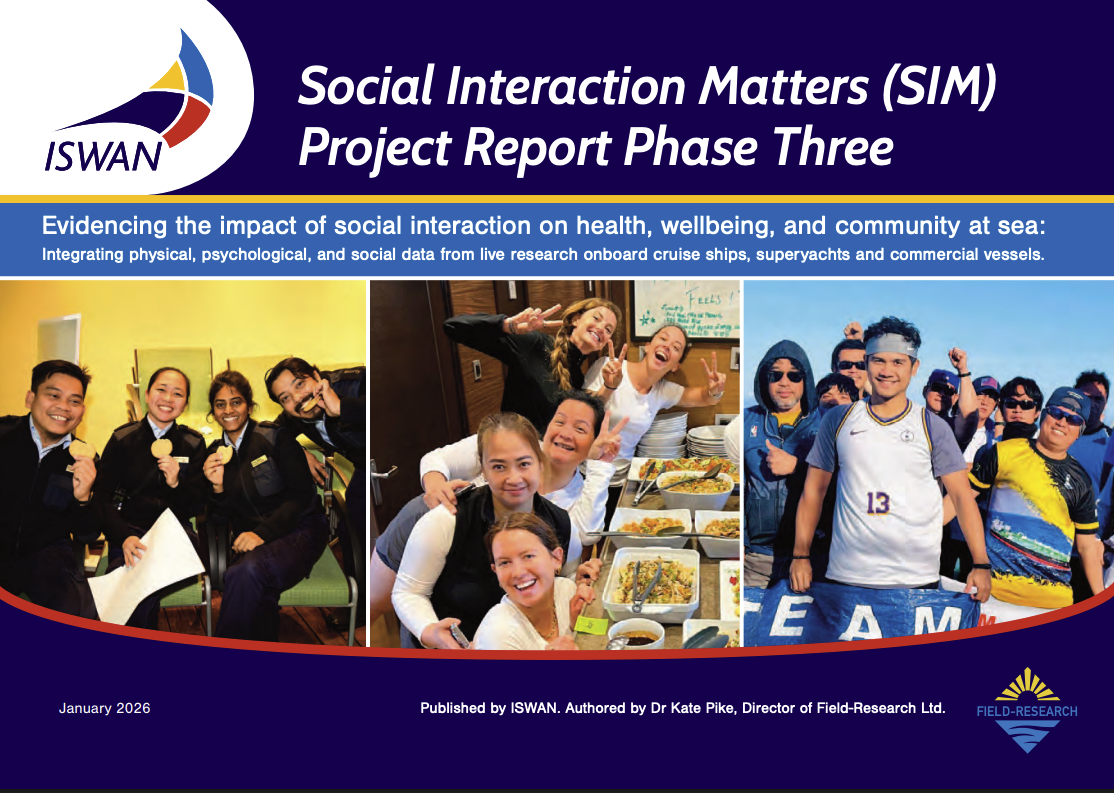
In January 2026, the International Seafarers’ Welfare and Assistance Network (ISWAN) published Phase 3 of its Social Interaction Matters (SIM) project, authored by Dr. Kate Pike, Director of Field Research Limited. Funded by the UK Department for Transport through the Trinity House Maritime Charity Department for Transport Fund, and supported by commercial partners including AIDA Cruises, Döhle Yachts, V.Ships, and Y.CO, this report significantly expands the SIM project’s scope. While earlier phases focused largely on cargo operations, this third phase integrates data from cruise ships and superyachts alongside commercial vessels, enriching the findings and allowing for meaningful cross-industry comparison. Over three months, 176 seafarers across six vessels shared their daily realities, contributing to one of the most holistic studies yet undertaken on social life at sea.
ISWAN is widely known for its SeafarerHelp 24-hour multilingual helpline, yet this report demonstrates the organisation’s growing contribution to evidence-based maritime welfare research. Building on foundational research begun in 2019, Phase 3 combines physical, psychological, and social data collection tools, including wearable technology provided by Fitbit and analytical tools developed by maritime partner PsyFyi. The result is a rare integration of subjective well-being data with measurable physical indicators, producing a multi-layered understanding of life on board.
The central finding is clear and compelling: “Social interaction was shown to be a vital protective factor for well-being, which was highly valued by crews across the participating industries.” The report further concludes that “When present and supported, social life on board enhanced morale, reduced stress, and strengthened team cohesion, all of which are critical contributors to a safe working environment.” At the same time, it acknowledges a persistent tension. “Despite these successes, social connection is often constrained by operational issues, particularly fatigue and long working hours, especially among officers and superyacht crews.”
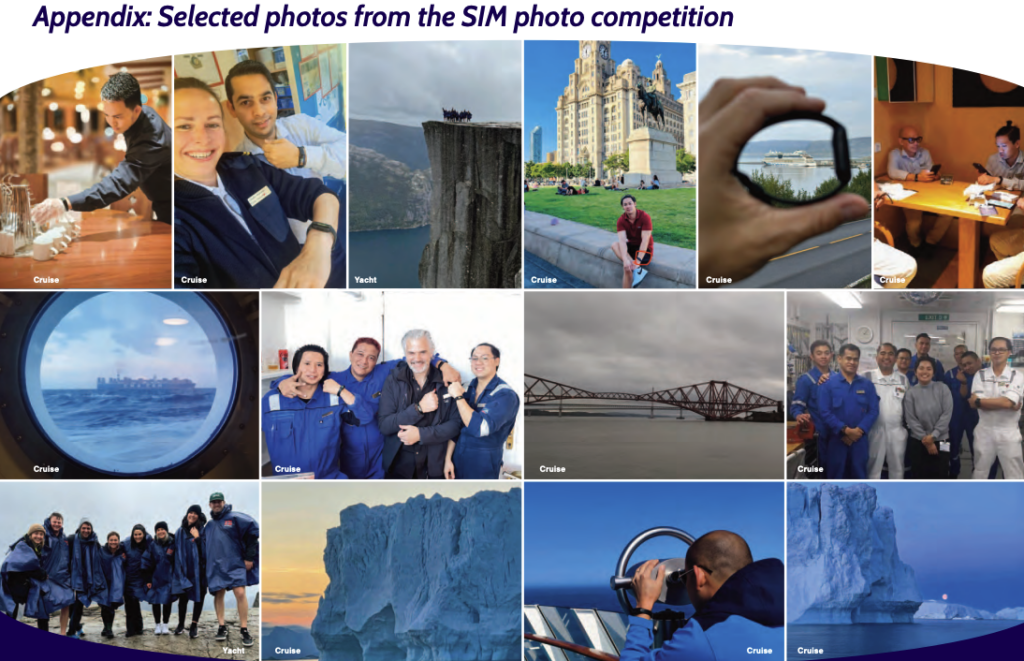
One of the strengths of this phase is its nuanced comparison across vessel types. Cruise ships and superyachts are often assumed to offer richer social environments than cargo ships. Yet the report challenges easy assumptions. On some vessels, “social life is minimal when guests are on board and crew live in confined, often shared quarters with limited personal space and privacy.” The data show that structural and operational pressures frequently override theoretical opportunities for connection. The research also highlights disparities by rank and gender, with women seafarers and officers often reporting higher levels of emotional strain and lower social participation.
A particularly important and measurable finding concerns the presence of trained “social ambassadors” on board. The study demonstrates that this role has a positive and quantifiable impact, enhancing morale and crew cohesion. The existence of a designated well-being advocate validates what many welfare practitioners have long intuited: social life does not simply emerge spontaneously. It requires facilitation, intentionality, and leadership. The report therefore recommends designing inclusive, low-pressure social activities that respect diverse personalities and cultures. This is a significant development from earlier SIM phases, making explicit the structural responsibility required to foster healthy community on board.
Fatigue emerges as the dominant cross-industry issue. Across vessel types, low satisfaction with rest and persistent mental exhaustion were recorded. Fatigue affects crew regardless of rank, gender, or vessel, pointing to a systemic imbalance in work-life structures. Crucially, the report shows that fatigue is not solely a matter of hours worked or sleep deprivation. It is deeply intertwined with the quality of social interaction and the emotional demands of the job. Those in guest-facing or leadership roles reported higher levels of mental and physical exhaustion, even when their physical workload was lower. Mental exhaustion, not merely physical tiredness, appears as a defining challenge.
Interestingly, while most seafarers valued social engagement, participation was often limited by long working hours, fatigue, or a desire for solitude. Social life in the study included friendships, informal socialising, relaxation with others, and feeling part of a community. Yet some respondents noted that after long shifts, their priority was calling family. One seafarer commented, “I think it’s more important to spend time calling your family, especially this kind of job we had.” Another observed, “Majority of my rest time is to spend my family do video call.” These remarks underline the complexity of social life at sea. Connection with fellow crew members is important, but connection with family often takes precedence. Opting out of onboard social activities is not necessarily a rejection of community but may reflect a need to recharge emotionally or maintain personal boundaries.
A recurring theme throughout the data is the need for personal space and time to recover. Enjoyment of socialising scored highly across vessel types, yet the inability to relax or being too tired to participate reduced overall well-being, particularly on superyachts. Satisfaction with food and recreation facilities was generally high, but time spent outside, both on deck and onshore, scored significantly lower. The most common reason was simple: lack of time. Shore leave and recovery periods were therefore identified as essential. The report recommends planning regular shore leave opportunities, improving infrastructure for rest and shared living spaces, reassessing crew resourcing and workloads to allow genuine rest, supporting predictable rotation schedules, and creating private spaces for recovery.
Communication also emerged as a critical factor. Autonomy over free time, feeling valued by the company, work satisfaction, and communication with family and friends were consistently rated as highly important. Social interaction on board supports well-being, yet operational pressures frequently undermine it. Fatigue remains the single greatest barrier to meaningful connection.
The report concludes with a call to move beyond minimum compliance. It urges the maritime sector to invest actively in the human and social dimensions of life at sea. Structural social interaction is not a luxury but integral to sustaining crew well-being, operational safety, and long-term industry resilience.
From my perspective, two themes stand out. First, social interaction must be prioritised intentionally. It requires leadership, resources, and designated responsibility, such as the onboard social ambassador role. Community at sea does not happen automatically. Second, fatigue and rest are foundational. Without adequate rest, even the best-designed social programmes will fail. Genuine recovery, predictable schedules, private space, and meaningful shore leave are not peripheral concerns but central enablers of social health.
Phase 3 of the SIM project confirms what many seafarers’ welfare practitioners have long observed: human connection at sea is both fragile and indispensable. Investing in it is not sentimental. It is strategic, measurable, and essential for a safe and sustainable maritime industry.