
NAMMA at CMA Shipping 2026: Keeping Seafarers’ Welfare in the Conversation
by Jason Zuidema (NAMMA)
From March 10 to March 12, representatives of the North American Maritime Ministry Association (NAMMA) were present at the CMA Shipping Conference in Stamford, Connecticut. The CMA Shipping Conference is one of the premier maritime gatherings in North America, particularly influential in the tanker and dry bulk sectors. Each year it brings together shipowners, operators, and maritime leaders from around the world, along with representatives of key international organizations that shape global shipping. Among those present were leaders and representatives from organizations such as the International Chamber of Shipping, Intertanko, Intercargo, CLIA, and BIMCO, alongside many of the leading shipowners in the tanker and dry bulk trades.
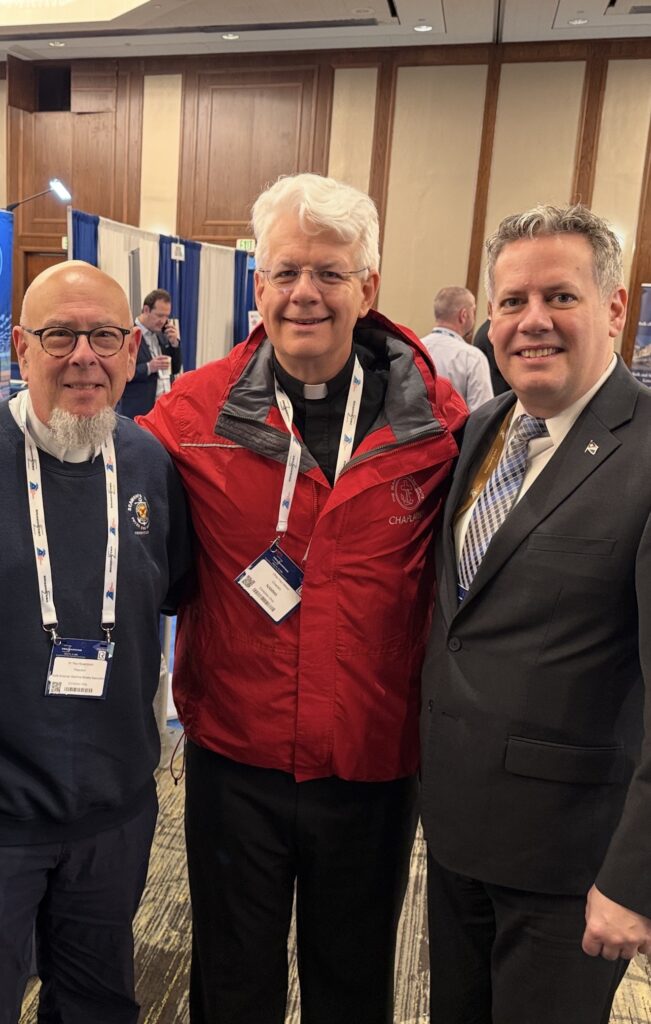
For NAMMA and our partners in the International Christian Maritime Association (ICMA), participation in this kind of industry event is important. While much of our daily work takes place in ports and seafarers’ centres, conferences like CMA Shipping help us remain connected to the broader trends shaping the maritime world. Issues such as decarbonization, regulatory developments, and the evolving structure of global shipping all have direct implications for seafarers and for those who serve them. Being present in these conversations allows seafarers’ welfare to remain part of the wider maritime dialogue.
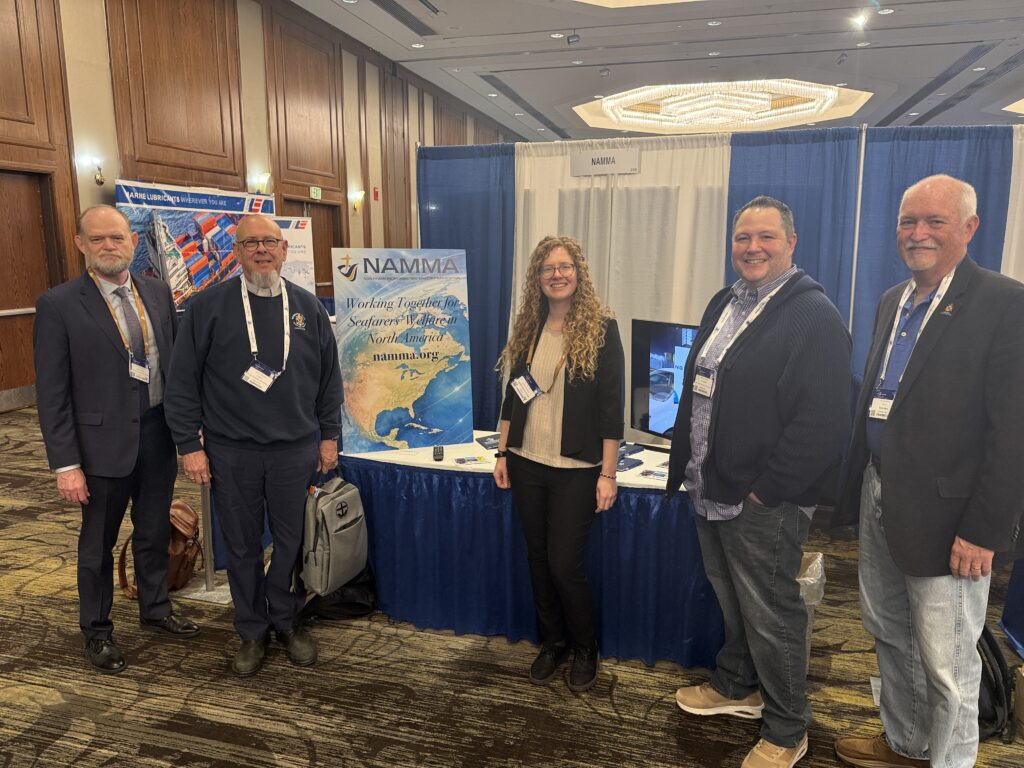
NAMMA and several of our partners were present in the conference’s exhibitor hall, where welfare organizations shared space alongside maritime companies, service providers, and industry groups. It was encouraging to see exhibition booths from the Seamen’s Church Institute, Sailors’ Snug Harbor, The Mission to Seafarers, and Seafarers International House alongside the booth hosted by NAMMA. These organizations, long committed to supporting seafarers, provided an important reminder to conference participants that behind every vessel and every cargo movement are the men and women who work at sea.
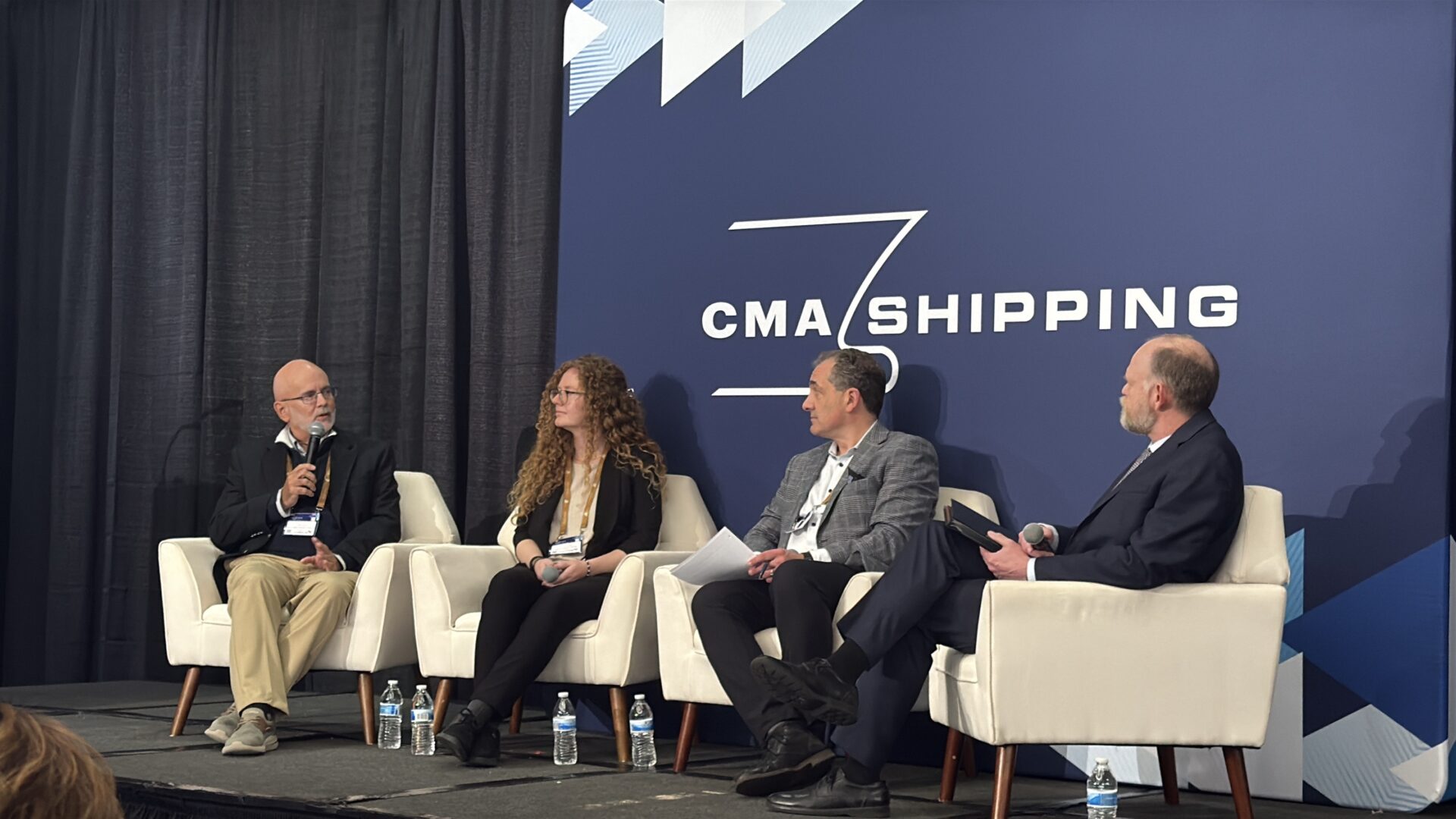
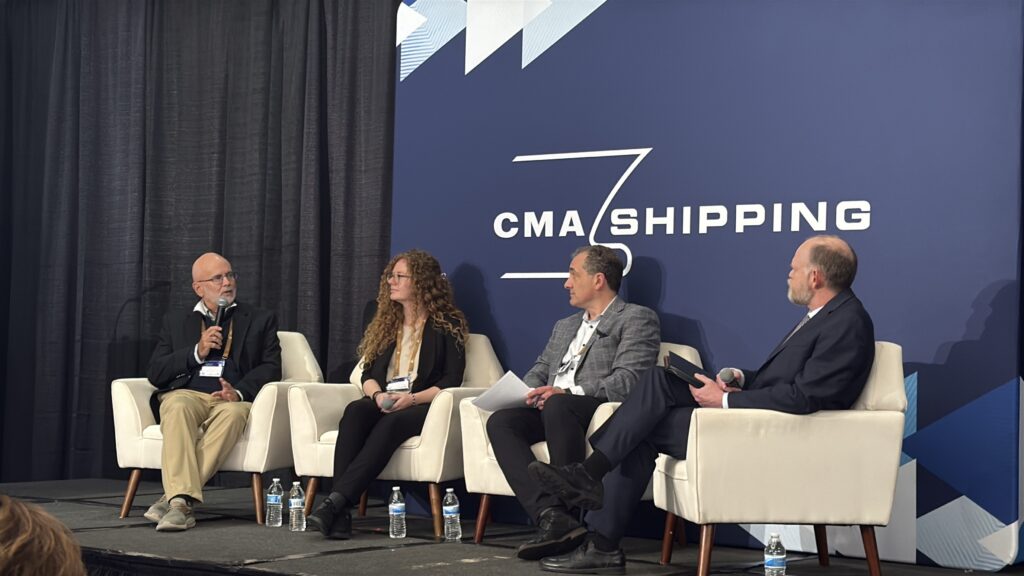
NAMMA and its members also contributed to a number of panels and discussions during the conference. Panelists included the Rev’d Mark Nestlehutt of the Seamen’s Church Institute, Ben Bailey of the Mission to Seafarers, Phil Schifflin of the Center for Mariner Advocacy (SCI), and Dr. Jason Zuidema of NAMMA. Their participation ensured that the perspectives of seafarers’ welfare organizations were part of the broader industry discussions taking place throughout the conference.
One of the more engaging moments of the week came with a special live recording of The Last Dinosaur – Maritime Shipping in the Digital Age podcast, hosted by Chris Aversano. The recording featured several NAMMA members – Rev. Stephen Cushing, Julia Cooper, and Christopher Graham and provided an opportunity to reflect on the evolving maritime industry, the human dimension of shipping, and the continued relevance of maritime welfare organizations.
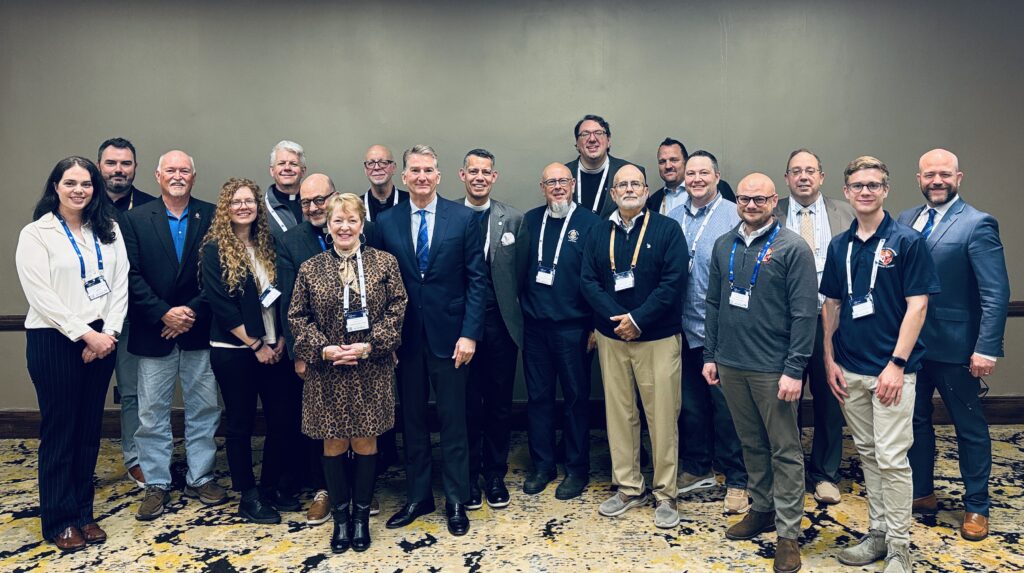
NAMMA also used the occasion of the conference to convene its own board meeting. Gathering many board members and partners in one place allowed the organization to discuss its strategic planning and to take a number of important decisions about future priorities and initiatives. Conferences like CMA Shipping often serve as valuable moments not only for networking with the wider industry but also for strengthening internal collaboration among welfare organizations.
NAMMA’s President, Deacon Paul Rosenblum, reflected on the importance of the gathering:
“As always, this year’s CMA was a great opportunity to meet and talk with many representatives from the maritime industry and make sure that seafarers welfare remains a concern for all. That is always crucial, but with the current situation in the Persian Gulf, it is more critical than ever, and I think our efforts were very productive. Holding our NAMMA Board of Trustees meeting and a round table of members from the local area also gave us a great opportunity to network and support each other in our mission.”
One of the highlights for NAMMA was a special roundtable meeting that brought together twenty five members and partners from across North America and around the world. The conversation offered an opportunity for participants to share the joys and challenges of their work in seafarers’ welfare and to learn more about the ministries and services provided in different ports.
Throughout the conference, many sessions focused on the major themes currently shaping the maritime industry, particularly decarbonization and the evolving regulatory and operational environment of global shipping. Yet one issue captured a great deal of attention both on the main stage and in informal conversations: the conflict affecting shipping in the Strait of Hormuz. The security situation in the region served as a sobering reminder that seafarers often work in areas of significant risk. For those engaged in maritime welfare, these discussions reinforced the need to continue advocating for the safety, dignity, and protection of the men and women who operate the world’s ships.
NAMMA is grateful to the organizers of the CMA Shipping Conference for welcoming our participation and for providing space within the event to highlight the importance of seafarers’ welfare. Events like this help ensure that the human dimension of shipping remains visible within industry conversations.
This year also marked the final CMA Shipping Conference to be held at the long-time venue in Stamford, Connecticut. Next year, the conference will move to Houston, Texas. NAMMA looks forward to continuing its presence at the event in its new location and to engaging even more closely with members and partners in the Gulf Coast region.