

Welcome Home! A Visit to the Norwegian Church Houston
by Jason Zuidema (NAMMA)
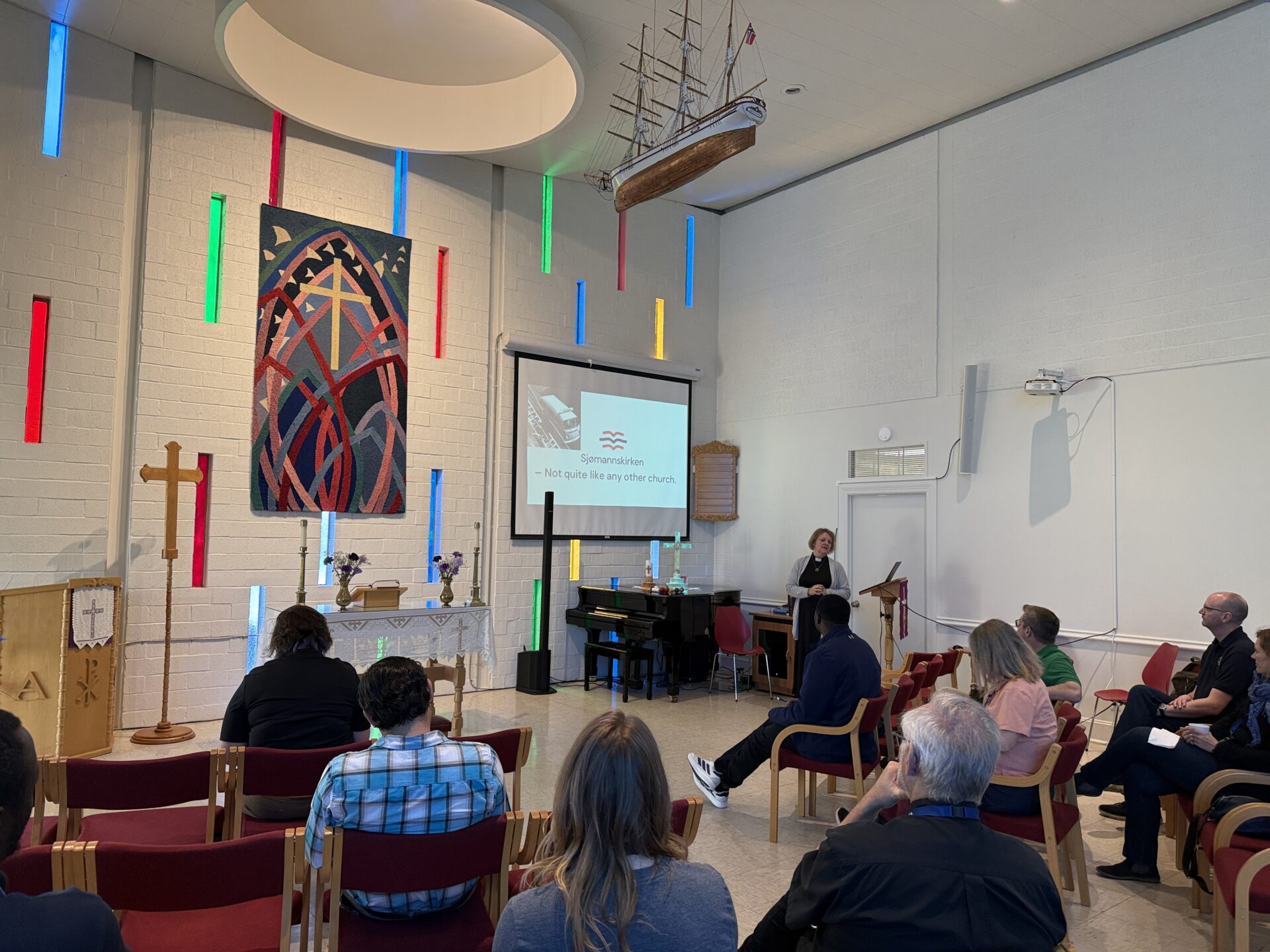
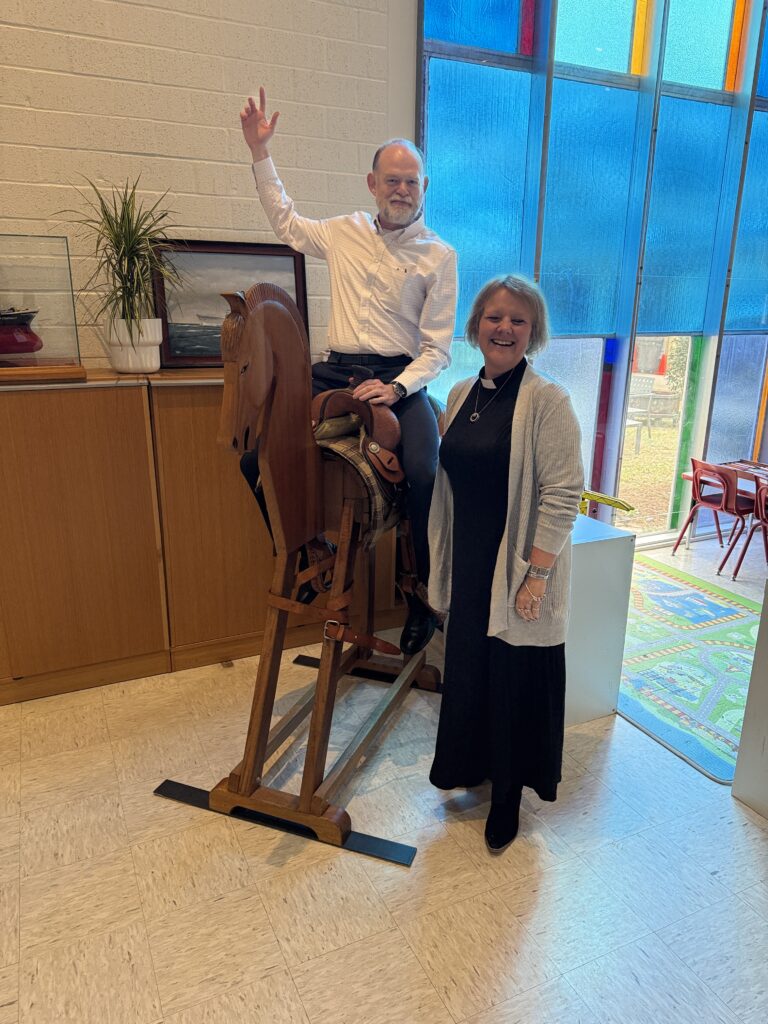
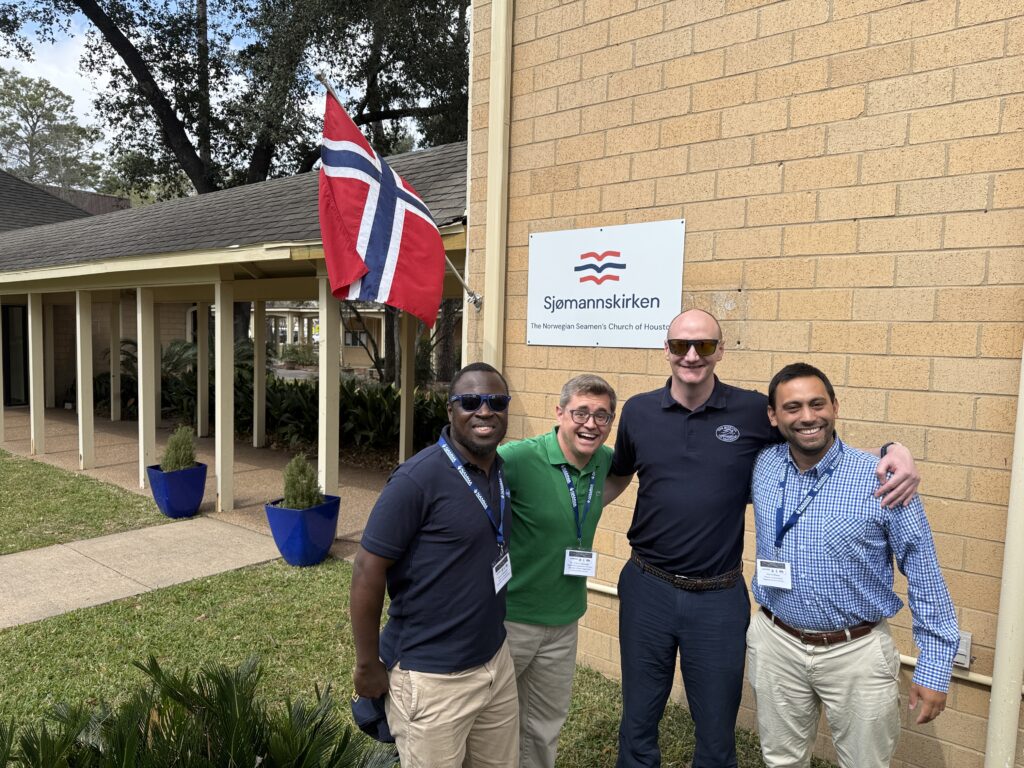
On a bright Houston morning, a group of maritime ministry students gathered at the new home of the Houston Norwegian Church (Sjømannskirken) at 12211 Memorial Drive, on property graciously owned by Christ The King Lutheran Church. The Sjømannskirken is part of the global International Christian Maritime Association, so students from other seafarers’ missions wished to visit one of their partners. The move from Pasadena marks more than a change of address. It represents a thoughtful relocation closer to where many Norwegians in the region now live and work. In a city shaped by energy, shipping, and international trade, the church stands as a religious, cultural, and social meeting place for Norwegians in the Houston area. The message is simple and heartfelt: Welcome home.
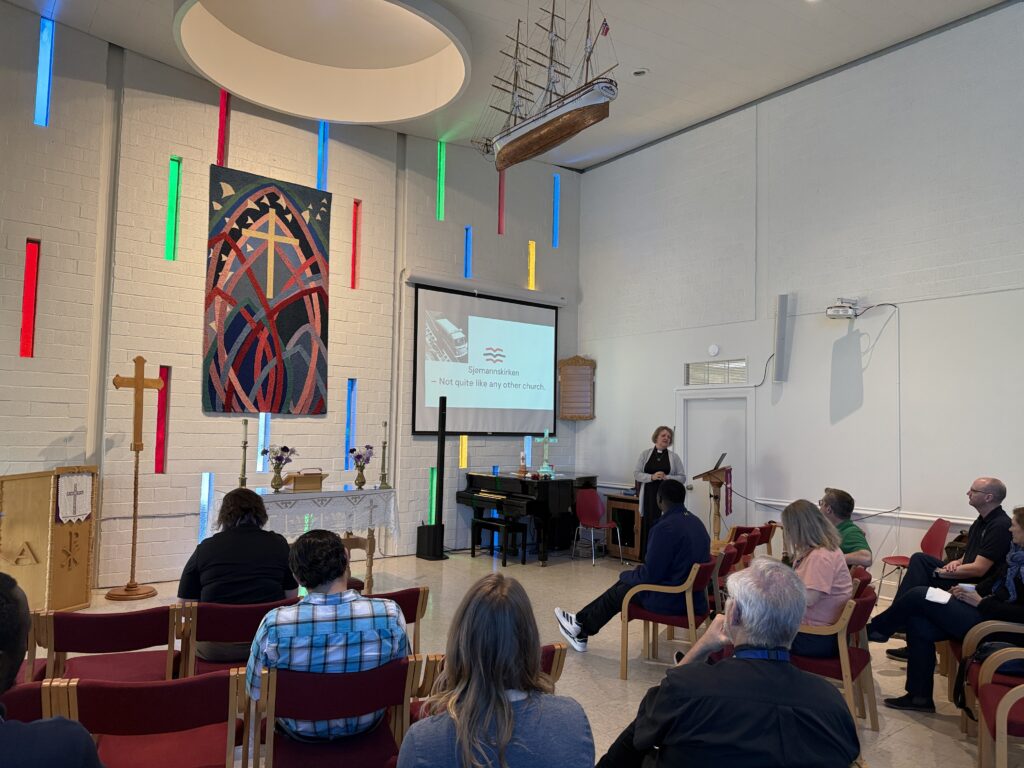
Though the Houston congregation does not serve large numbers of Norwegian seafarers on a regular basis, it remains deeply connected to the sea. Many who gather here work in oil and gas, maritime services, and port-related industries. The rhythms of offshore platforms, global travel, and corporate assignments continue the long Norwegian story of life shaped by the water. As Pastor Line Kvalvaag explained to the visitors in her presentation, the movement that gave birth to this church began in 1864, when a concerned Norwegian in a foreign harbour saw “all these young sailors that was walking around the harbour and kind of lost.” From that impulse grew a worldwide ministry dedicated to creating “a home away from home.”
She described how the organization evolved alongside Norway itself. Once focused almost exclusively on seafarers, it expanded as Norwegians began working on oil platforms and later spread across the globe for study, business, and family life. “It changed when we saw that actually now people are doing more things abroad,” she said. In 1983, the wider Norwegian church formally recognized the need to care for Norwegians living outside the country, and the ministry took on a broader role, serving expatriate families, students, and professionals. Today, the Houston church is one of many stations around the world, each shaped by local realities but bound together by shared experience.
Central to that experience is what she called “the church of the three tables.” Historically, these were the altar table, the coffee table, and even the pool table. While there is no longer room for a pool table in Houston, the spirit remains. The church is intentionally “a social, cultural and religious place,” open not only to committed churchgoers but also to those who may hesitate at the word “church.” As she put it, “You don’t have to believe in God. You can believe whatever you want. You are welcome here, because this is home away from home.” In her words, “we are doing Christ more than we are preaching Christ,” describing a mission expressed “with actions much more than words.”
A striking priority in her ministry is active listening. She spoke candidly about how difficult listening can be. “I think I’m terrible at this,” she admitted with a smile, noting the temptation to assume we already know what someone will say. She explained that through group exercises, she has learned the power of letting someone “tell their story for seven minutes” without interruption. When a story is reflected back, she observed, people often say, “I heard my own story… I saw myself from the outside.” Listening, she emphasized, gives control, restores dignity, and creates space for healing. “Be present, listen, listen, listen,” she urged. “Stop talking.”
Her stories from ships, platforms, and crisis situations underscored how life can change in a moment. A captain who received devastating news at sea did not need grand theological explanations; he needed “that hand on his shoulder.” On a cruise ship, she spent hours with a grieving family, speaking very few words. “I have never, ever in my life, had so few words in any conversation,” she reflected, yet the presence itself mattered. These experiences have shaped her conviction that ministry is not about being the hero. “The only one I’m an expert on… is myself,” she said. The calling is simply to remain, to accompany, and to ask, as Jesus did, “What can I do for you?”
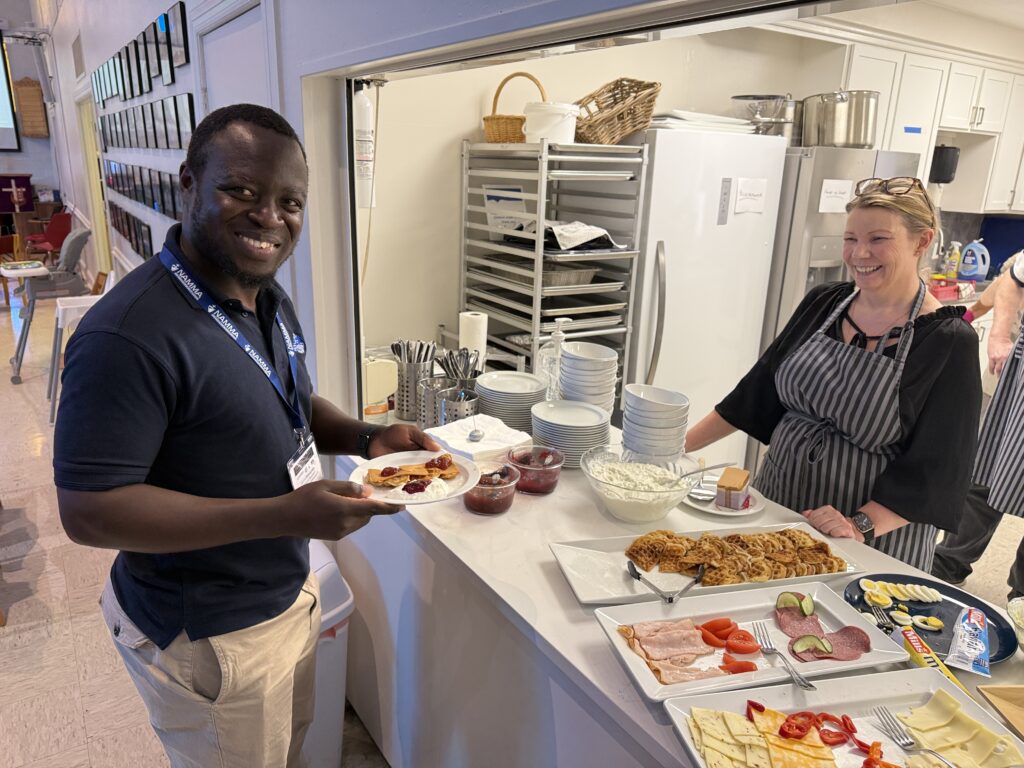
The students who visited the Houston church encountered not only theology but hospitality. After the presentation, they enjoyed a delicious meal and the warm sweetness of heart-shaped waffles, a beloved tradition. Laughter filled the room as Norwegian sandwiches were prepared and passed around. Brown cheese, served properly with jam, sparked curiosity and delight. Cultural practices became bridges of connection, embodying the church’s dual identity as both sanctuary and gathering place.
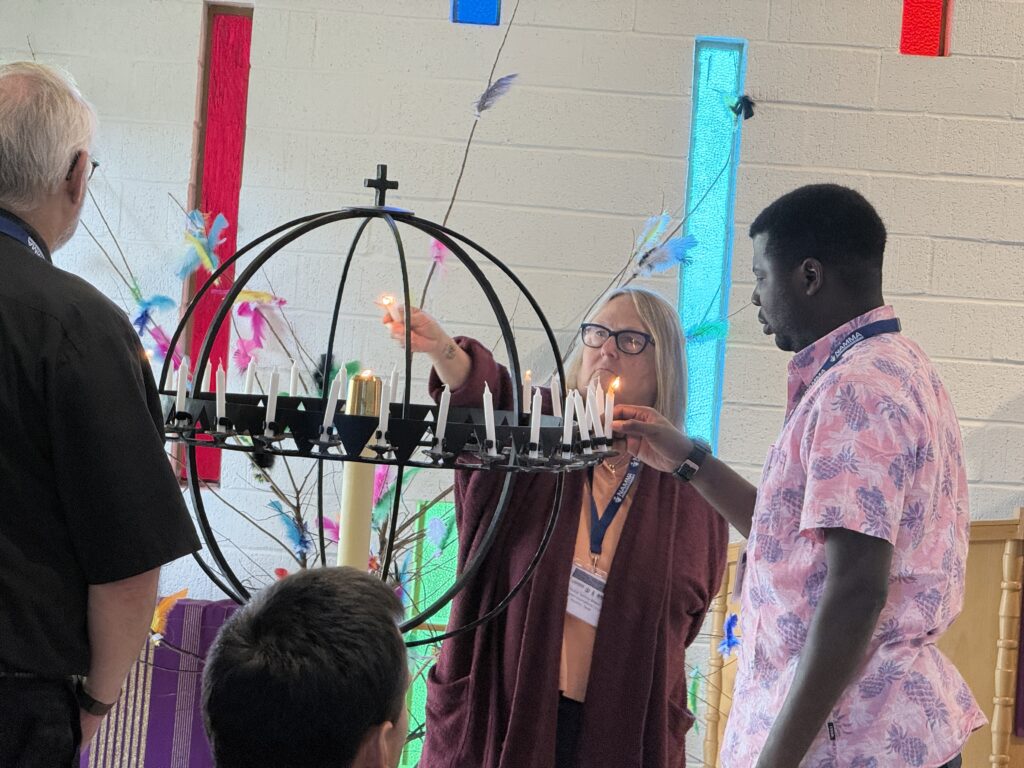
The visit concluded quietly and reverently. After lunch, candles were lit for the time of prayer. In that simple act, the strands of social, cultural, and religious life came together. In a city of highways and high-rises, offshore schedules and global flights, this small Norwegian community offered something steady: presence, memory, and hope. The new location on Memorial Drive places the church physically closer to its people, but its deeper work remains unchanged. It continues to be a home away from home, a place where Norwegians connected to the sea, to energy, and to one another can be seen, heard, and welcomed.
For those wishing to learn more about the Houston Norwegian Church and its ministry, further information is available at https://www.sjomannskirken.no/houston/.