

Stella Maris: A Ministry of Presence and Welcome to Seafarers
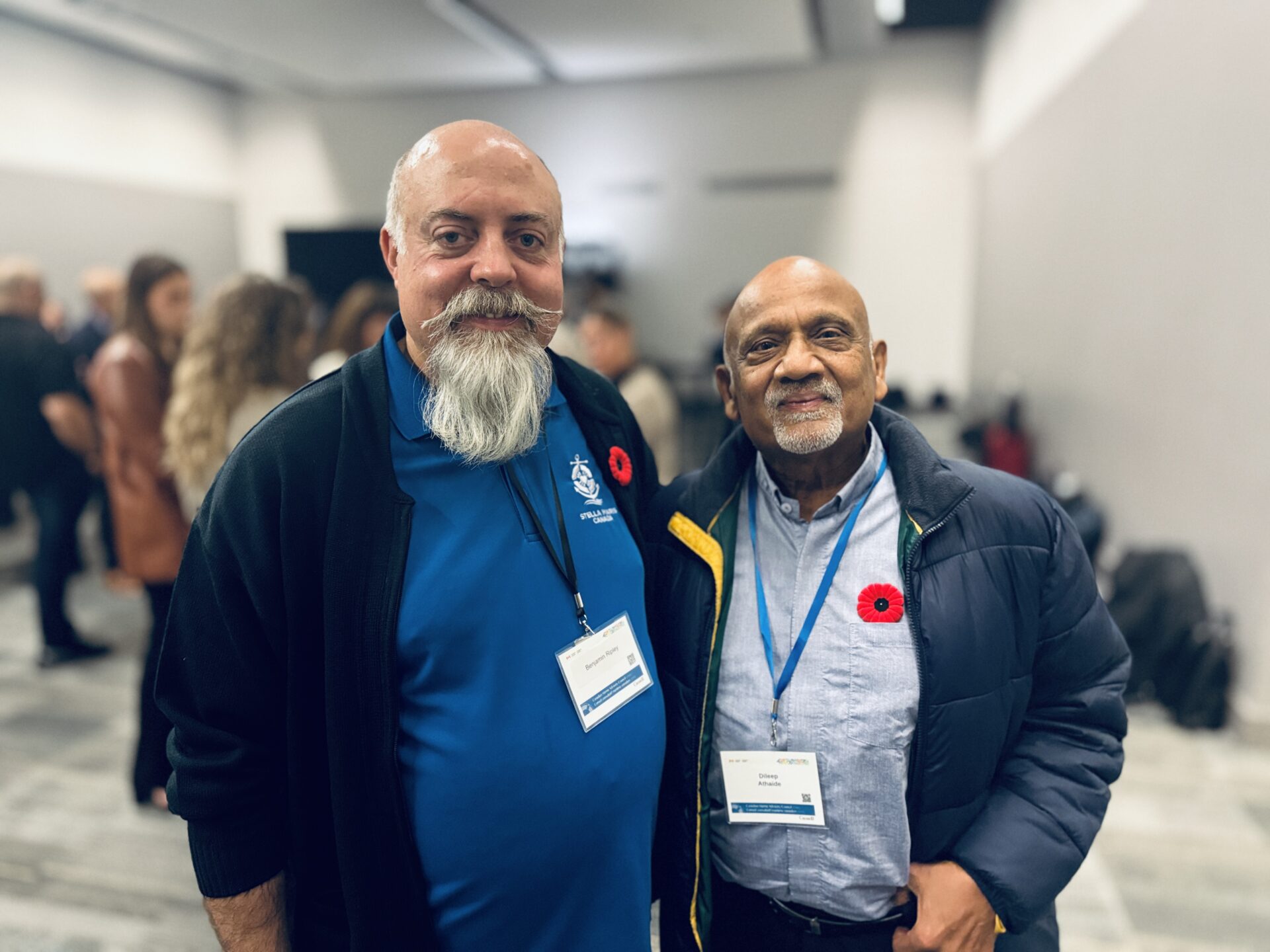
During the Canadian Marine Advisory Council (CMAC) meeting in Ottawa on November 3, 2026, NAMMA had the opportunity to meet with Dcn. Dileep Athaide, Stella Maris Port Minister in Vancouver and National Director of Stella Maris Canada, and Fr. Benjamin Ripley, OFM, Stella Maris Port Chaplain in Montréal. We spoke with them about the work of Stella Maris in Canadian ports, the importance of ship visiting, and the practical and spiritual support offered to seafarers far from home. They also shared how local Catholic parishes can become involved in this ministry and what motivates them in their daily work.
What is Stella Maris?
NAMMA: What is Stella Maris?
Dcn. Dileep Athaide: Stella Maris is Latin for “Star of the Sea,” which is one of the titles of the Blessed Virgin Mary. The Star of the Sea has traditionally been associated with the protection and guidance of seafarers, particularly in navigation. We are an international organization, also known as the Apostleship of the Sea. We serve seafarers of all nationalities, religious denominations, and ethnic backgrounds who visit our ports. The basis of our ministry is that these seafarers are away from their homes, families, and communities, usually for six to nine months at a time. Our objective is to provide them with pastoral and practical care while they are visiting Canadian ports.
NAMMA: Approximately how many Canadian ports have Stella Maris port ministers?
Dcn. Dileep Athaide: We are currently present in about eight ports across Canada. We have a couple of vacancies, but ideally we should have a presence in approximately twelve ports.
Why are ship visits important?
NAMMA: Father Benjamin, why do you do ship visits?
Fr. Benjamin Ripley: Ship visits are the foundation of our ministry because we need to go in person. As Pope Francis encouraged us, we need to go out and be with the sheep. It is not very effective to simply stay in an office. We need to go out to the ships, visit the seafarers, and connect with them personally. We want to understand what they are experiencing, whether they are facing problems or challenges, what their general mood is, and how their time at sea has been going.
What happens during a ship visit?
NAMMA: What do you practically do for seafarers during a ship visit? For those who may not know what a ship visit involves, could you describe things that you typically do?
Dcn. Dileep Athaide: We are very much a ministry of presence. Simply having someone come aboard to visit the seafarers, show an interest in their welfare, ask how they are doing, and welcome them to the country is important. From there, we try to understand what their practical and pastoral needs might be.
We serve people of all nationalities and religions. For example, when I visit a ship with an Indonesian crew, I know that many of them are likely to be Muslim. Just last week, I took five Indonesian seafarers in my van to go shopping. I greeted them with “As-salamu alaykum,” which is a greeting of peace, somewhat like Christians saying, “The Lord be with you.” They immediately responded. Their eyes lit up, and a bond was formed. They recognized that we were there to offer friendship and some relief from the isolation of life aboard a ship.
Sometimes seafarers can feel almost like prisoners aboard their vessels. That may sound rather harsh, but they are living together in a confined environment, often with twenty or twenty-four people aboard. On some ships, the relationships among the crew are wonderful, while on others they can be more difficult. Our visits offer a connection with the outside world. That is really the basis of what we do.
Fr. Benjamin Ripley: As a Catholic chaplain, I can also offer blessings, prayers, and sometimes celebrate Mass for the crew if they request it. We can provide the sacraments, which is something distinctive about our Catholic ministry. Many of the seafarers coming to Montréal are Catholic, including Filipinos, Ukrainians, and others. Being able to offer them these spiritual services is an important part of our ministry.
NAMMA: And what are some of the other small, practical things you do besides talking with the seafarers and offering blessings?
Fr. Benjamin Ripley: We might pray with them, offer a blessing, or give them a devotional item, such as a rosary. These small gestures can be very meaningful.
Dcn. Dileep Athaide: We also provide transportation for seafarers. Father Benjamin brings them to the seafarers’ centre, where they can relax, play a game of pool or foosball, buy some snacks or souvenirs, and simply enjoy some time away from the ship. These are some of the practical services we offer.
How can Catholic parishes support Stella Maris?
NAMMA: If someone from a local Catholic parish wanted to support Stella Maris, how would you suggest they could help, either in their local port or nationally?
Dcn. Dileep Athaide: We already have Catholics who help us with practical matters, such as knitting tuques or hats for seafarers or providing toiletries. These are simple but useful contributions. We also encourage people to become involved through prayer and spiritual support. Many of our Stella Maris chaplains are also parish priests. They may be responsible for a parish and sometimes even a parochial school. It is important to support them and help establish connections between their parish communities and the ministry to seafarers. Another valuable contribution is language. If parishioners speak the languages of visiting seafarers, they can help us connect with them. Fortunately, most seafarers have a working knowledge of English, as it is generally required for their work. Nevertheless, being able to speak with someone in their mother tongue makes a tremendous difference. Whether it is Tagalog for Filipino seafarers, Hindi or Punjabi for Indian seafarers, or another language, it helps establish relationships and makes the seafarers feel more welcome. Parishioners can make an important contribution in that way.
What brings you joy in this ministry?
NAMMA: What is your main motivation for doing this work? What brings you joy on a daily basis?
Fr. Benjamin Ripley: For me, it is the opportunity to connect with seafarers. I am a former seafarer myself, so I understand something of their work and share their love for the sea. It brings me joy to see them get off their ships and visit our centre, where they can connect with others, relax, and experience God’s love. That personal connection is what makes this ministry so meaningful.
Dcn. Dileep Athaide: For me, ultimately, it is the spiritual dimension of the ministry. We are called to visit the stranger and bring some joy into people’s lives. When seafarers visit our country, they are strangers in a foreign place. Being able to welcome them, offer friendship, and bring them some happiness is my ultimate motivation.
NAMMA: Thank you both very much for sharing your experiences and for your service to seafarers across Canada.