

The Unseen Realities of Seafaring
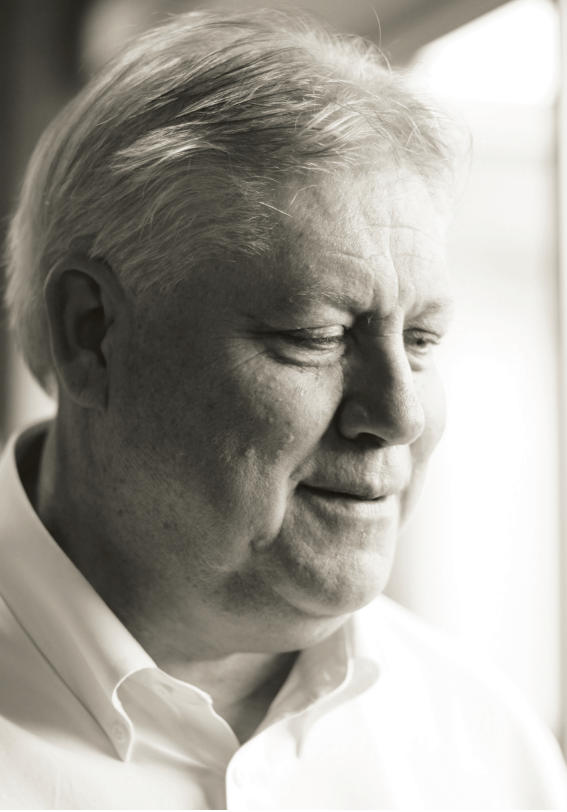
Ken Hawkins recently sent us some reflections from a long trans-Pacific cruise, and with his permission we share them here because they capture something important about life at sea that is often hidden from view.
Ken is retired Executive Director of the Mission to Seafarers in Seattle, Washington. He spent many years serving and advocating for seafarers on the Pacific coast of North America and globally.
⸻
by Ken Hawkins
My wife and I are enjoying a long trans-Pacific cruise – Tokyo to Vancouver and up and down the Alaska coast watching for wildlife and whales and orcas.
In my long association with the Mission to Seafarers and other seafarer ministries, I have always appreciated the difficulties associated with life at sea: separation from family, everyday challenges on board with multinational, multicultural, multi-faith colleagues, and long hours in a difficult physical environment. From the perspective of a much-traveled Westerner, these challenges seem obvious and sufficient to warrant our sympathy and our support.
But this trip has really changed my perspective as I have come to appreciate less obvious, but no less taxing, challenges.
The first is time change.
In my dozen or so flights across the Pacific, and scores across the Atlantic, time change was always a one-time adjustment. Sure, it was often eight or ten hours, but in a couple of days all was well. At sea, going from Tokyo to Vancouver meant seven one-hour movements of the clock in nine days, including losing a day as we crossed the International Date Line.
Disorienting for sure.
We have really struggled with sleep patterns and adjusting to the really long days – exhausting even though we are pampered and supported. The ultimate “First World problem.” On a nice holiday cruise such a challenge is inconvenient, but for seafarers on transoceanic voyages that cross from New York to the Mediterranean, or Tokyo or Singapore to Los Angeles, or Buenos Aires to London, every day or two sees a new tick of the clock.
Many of the crew shared that this challenge and the resulting fatigue are under-appreciated. To be sure, the cruise industry, or at least the officers on this ship, work hard to mitigate some of the challenges, but the nature of the work does not allow for much flexibility.
Then there are rough seas.
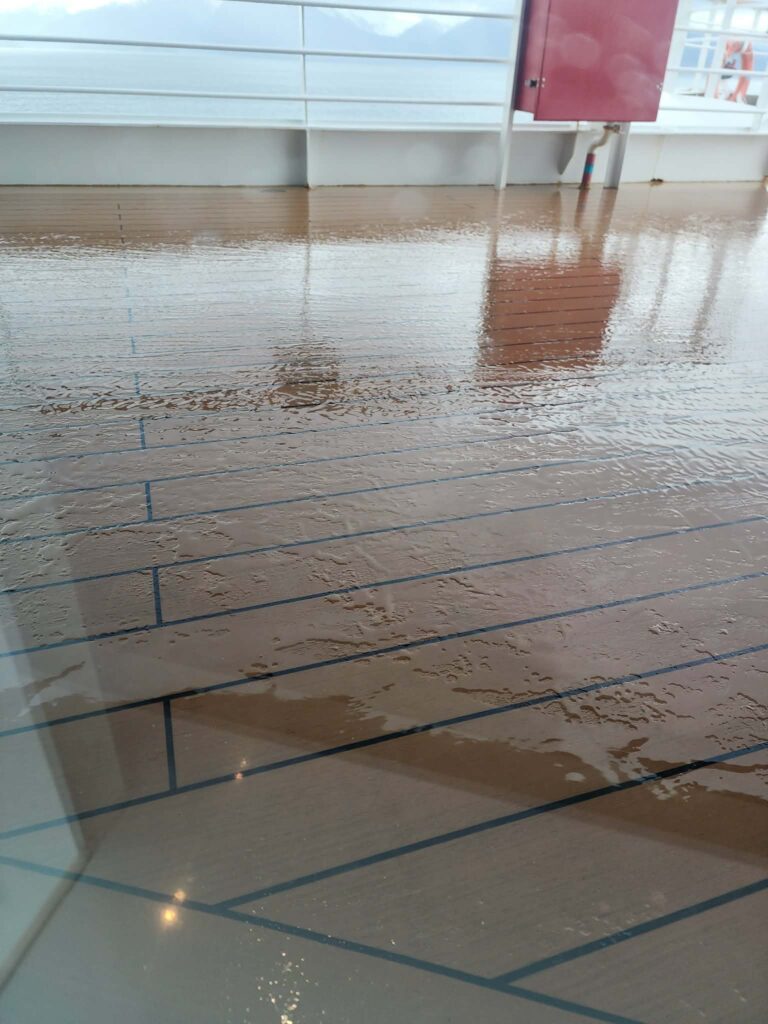
In the spring or fall, the Mediterranean is quiet and travel is easy. The North Atlantic is fine, perhaps only a little bumpy. The gentle rolling of the ship is an easy adjustment. But on our trans-Pacific journey, we experienced much rougher waters. Swells of ten to twenty feet, higher winds, and cold weather.
Again, in the pampered world of the cruise traveler such an experience, lasting a few days, was uncomfortable, and the leadership was able to adjust the schedule to minimize the impact on the cruisers. Plus, the nature of the cruise industry and its product is designed and timed for great weather and calm seas.
But for merchant seafarers, winter weather, storms, and high winds are unavoidable and exhausting.
I never appreciated how difficult life might be in such an environment. Our repositioning cruise was indeed uncomfortable for stretches of hours or a day or two or even three. But long journeys in the winter, battling high and cold winds and rough seas, are surely exhausting, both physically and mentally.
I met lots of seamen who had completed long and difficult trips from Asia to Seattle, but never really appreciated their hardship.
Communication is another challenge that changed my thinking.
Our family is scattered across the globe – Central America, the United Kingdom, the Pacific Northwest. From Seattle we can easily reach everyone with a little planning, and because these places have good communications infrastructure, we can have lots of family interaction.
For seafarers, life is much different.
While their families are stationary, they themselves are moving targets. Time change is one issue, but communications access at sea is still problematic. Thanks to the work of lots of advocating agencies, communications tools and access have improved dramatically. But communication with loved ones, or services back home, is still often spotty, and there is a real fear about security of information.
The tools associated with communications providers and the devices themselves – laptops and hand-held devices – are not always compatible with local practices or regulations. For example, my internet and cell service did not work well in Alaska, and the international phone plan required different protocol in Hong Kong and Osaka.
For us, getting some banking done remotely, and paying tuition and services back home for our grandchildren, was not easy and was never accomplished promptly. It always took another day or two, and in some cases cost a few more bucks.
No big deal for well-heeled Westerners, but certainly a more palpable expense and stress for dads and moms far from home.
I am in awe of the resiliency and adaptive skills of seafarers. They adjust, meet these challenges, and move on – under-appreciated and uncomplaining.
Perhaps these comments simply validate what many in maritime ministry already know. On the cruise ship, few passengers even recognize these hardships and challenges.
I love these cruises because I learn something every time – the expected as we visit exotic ports and see famous landmarks and iconic places. But the unexpected is what makes travel so compelling.
And for me – it’s the crew.
We hardly ever chat with other cruisers, but I know a third of the crew on this ship already!